Resource Books
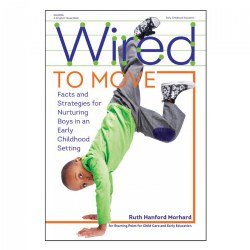
Wired To Move: Facts and Strategies for Nurturing Boys in an Early Childhood Setting - Paperback
Item: 27684
Status: In Stock
$19.95
Learn what makes boys tick (and run and jump and yell), and discover how to actively engage the boys in your early childhood classroom with simple effective strategies that support boys' learning. Using the latest brain research to explore and explain the differences in how boys and girls learn, 'Wired to Move' provides early childhood educators with facts and strategies to actively engage boys in an early childhood setting. It addresses the unique needs of African-American and Hispanic or Latino… More »
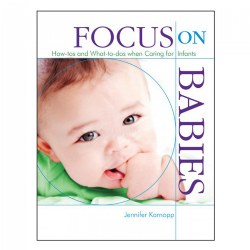
Focus on Babies: How-tos and What-to-dos when Caring for Infants - Paperback
Item: 29009
Status: In Stock
$19.95
A beginner's primer to providing professional child care for infants! The elements of a quality learning environment are not the same for every age. What works for preschoolers does not always work for toddlers, and what might be appropriate for toddlers is not necessarily the best arrangement for infants. Complete with tips for creating a developmentally appropriate environment and experiences that stimulate infants' muscles and minds, Focus on Babies gives you the tools to craft a quality learning… More »
Games to Play with Two Year Olds, Revised - Paperback
Item: 80426
Status: In Stock
$14.95
This resource book is packed with opportunities to build confidence and to enhance language, coordination, social interactions, and problem-solving skills. A must-have for anyone caring for a child between the ages of two and three. Turn ordinary, everyday routines into fun learning experiences! 256 pages.
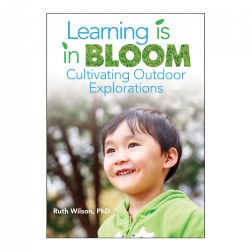
Learning is in BLOOM: Cultivating Outdoor Explorations - Paperback
Item: 72385
Status: In Stock
$19.95
The movement to connect young children with nature continues to grow, as more parents and educators become passionate about bringing learning outdoors and letting children explore outside the bounds of traditional lessons. In the full-color Learning Is in Bloom, teachers and caregivers will find 40 hands-on activities effective in engaging young children in investigating nature, both indoors and outdoors, on the school grounds, and on excursions around the neighborhood. Through fostering a love… More »
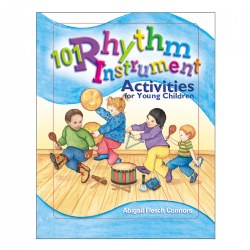
101 Rhythm Instrument Activities - Paperback
Item: 22071
Status: In Stock
$14.95
2 years & up. You have the instruments! Now you can add new activities for more musical fun. This book includes 101 ideas, a subject index, monthly planning pages and teacher tips to fit every curriculum. Paperback. 120 pages.
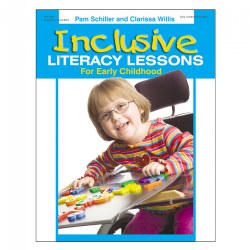
Inclusive Literacy Lessons for Early Childhood - Paperback
Item: 15905
Status: In Stock
$24.95
Best-selling, award-winning authors Pam Schiller and Clarissa Willis have teamed up to create this collection of 100 literacy lessons, designed to introduce children ages 3-6 to a variety of literacy concepts and build important literacy skills. Each of these simple, fun lessons offers adaptations for children with special needs, including: visual and hearing impairments, cognitive challenges, motor delays, speech/language delays, and emotional/behavior issues. The first page of each two-page lesson… More »
The GIANT Encyclopedia of Transition Activities for Children 3 to 6 - Paperback
Item: 60345
Status: In Stock
$34.95
Over 600 attention-grabbing activities to help turn stressful moments into fun learning experiences. Teachers will be able to use the transition activites in this book to fill a spare minute, help children calm down, wait for another activity, and much more. Through play, children learn to comuniate, interact,and expand their cognitive thinking horizions. 576 pages.
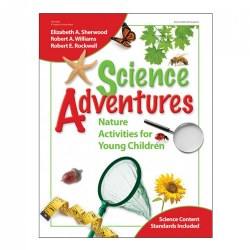
Science Adventures: Nature Activities for Young Children - Paperback
Item: 85431
Status: In Stock
$24.95
With more than 125 activities, Science Adventures opens up a world of exploration through nature activities in urban, suburban, or rural settings. From Big Step Measuring and Rocks That Write to The Ant Restaurant and How Far Can You Squeeze a Squirt?, the engaging activities in Science Adventures make exploring the environment fun and easy! The authors have adapted the kindergarten science standards set by the National Academy of Sciences to make them developmentally appropriate for preschool children.… More »
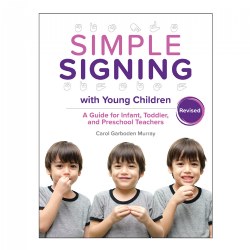
Simple Signing with Young Children - Revised - Paperback
Item: 92919
Status: In Stock
$29.95
Because their vocabularies haven't yet caught up with their thoughts and emotions, young children often struggle to communicate. Sign language can help them express themselves effectively to adults and peers--without the emotional outbursts caused by frustration! This book features the latest research to equip educators and caregivers with the tools and resources to teach young learners how to effectively communicate. Paperback. 208 pages.
CLASS® Score Sheets - Infant Forms - Set of 5 - English
Item: 90820
Status: In Stock
$30.00
Each booklet contains 6 observation sheets, 1 scoring summary sheet, and 8 note-taking pages, these are the forms needed to conduct the Classroom Assessment Scoring System® (CLASS) Infant observation. These forms are part the infant version of the trusted, widely used CLASS® tool, the bestselling classroom observation tool that CLASS® Infant tool was developed for use with children from birth to 18 months and assesses 4 dimensions of teacher-child interactions: relational climate, teacher… More »
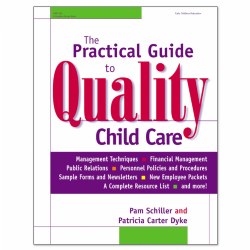
The Practical Guide to Quality Child Care - Paperback
Item: 47289
Status: In Stock
$24.95
This uniquely comprehensive manual is a clear, easy-to-read handbook that provides specific guidelines for virtually every aspect of early childhood administration. Contents include: sample criteria, procedures for program development, schedules, applications, and evaluation forms. An invaluable tool for every child care facility manager.
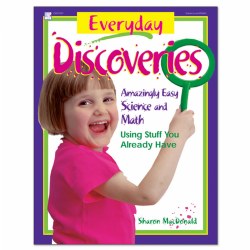
Everyday Discoveries - Paperback
Item: 42226
Status: In Stock
$19.95
PreK & up. Self-directed, open-ended activities incorporating daily events and ordinary materials help children easily learn science and math. 246 pages.
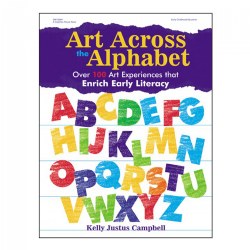
Art Across the Alphabet - Paperback
Item: 47923
Status: In Stock
$14.95
Create readers while creating art! Contains activities that reinforce letter recognition and pre-reading skills. 160 pages.
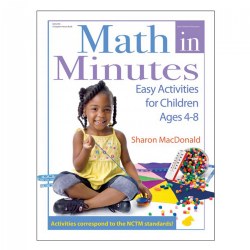
Math in Minutes: Easy Activities for Children Ages 4-8 - Paperback
Item: 50073
Status: In Stock
$19.95
The engaging, exciting introduction to early math concepts will be a sure-fire hit with young children. They can go on geometric shape hunts, measure with pompoms, or find the missing numbers. Includes activities that relate to the National Standards in the back of the book. 208 pages.
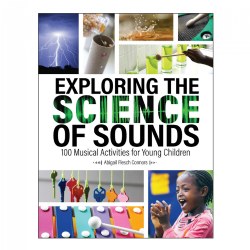
Exploring the Science of Sounds - Paperback
Item: 89713
Status: In Stock
$16.95
Most preschool teachers have musical instruments in their classrooms, but may not realize they can use them for science explorations. In this book, discover 100 activities that let children ages 3-6 explore the science of music and sound using materials easy to find for a preschool classroom. Children will use their bodies to create sounds, explore the relationship between size and pitch, investigate how tempo affects the way we listen to sounds, create musical instruments, and much more. From the… More »
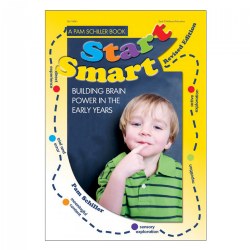
Start Smart, Revised Edition: Building Brain Power in the Early Years - Paperback
Item: 26128
Status: In Stock
$19.95
Did you know that emotions boost our memory? Or that small muscle exercises help the brain develop? Early experiences contribute to the structure of the brain and its capacities. The quality, quantity, and consistency of stimulation will determine, to a large extent, the number of brain synapses that are formed and how those connections will function. This is true for both cognitive and emotional development, and the effect is lifelong. Start Smart offers simple, straightforward ways to boost brain… More »
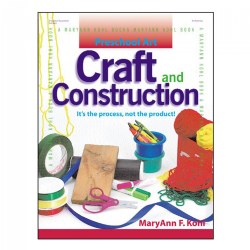
Preschool Art: Craft and Construction - Paperback
Item: 17246
Status: In Stock
$9.95
50 great ways to create with lace, string, fabric, glue, and other simple materials. Encourage children to experience the joy of exploration and discovery with this view series by MaryAnn Kohl. Make art fun and accessible to children of all ages with these creative, easy-to-do activities! Paperback. 64 pages.
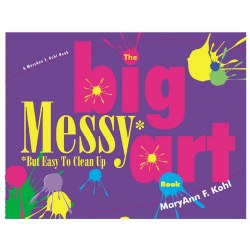
The Big Messy - But Easy to Clean Up - Art Book - Paperback
Item: 46271
Status: In Stock
$14.95
Take your children beyond the ordinary and into the amazing world of art! Children will explore and create with activities such as hair dryer painting, lawn prints, and face and body paint recipes. Paperback. 132 pages.
Around the Family Table: 365 Mealtime Conversations for Parent and Children - Paperback
Item: 19463
Status: In Stock
$9.95
"Around the Family Table" contains 365 intriguing questions guaranteed to spark lively discussions between parents and children. Families can establish a valuable, enriching tradition of spirited mealtime conversation that will bring them closer with every question. Paperback. 160 pages.
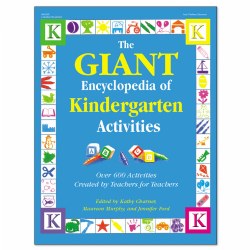
The GIANT Encyclopedia of Kindergarten Activities - Paperback
Item: 61271
Status: In Stock
$34.95
Contains over 600 activities written by teachers illustrating new ways to use everyday items to create fresh exciting projects. Also includes management techniques and helpful tips for working with kindergarteners. 640 pages.

Everybody Has a Body: Science from Head to Toe
Item: 17012
Status: In Stock
$19.95
Children discover the magic of science as they learn about their bodies. Over 280 instantaneous activities and ideas promote skills such as observation, inference and prediction. A vital resource for developing a basic foundation in scientific concepts.
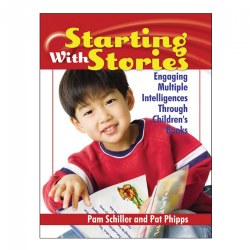
Starting with Stories - Paperback
Item: 81868
Status: In Stock
$24.95
Featuring 100 well-loved children's books, Starting with Stories has more than 1500 activities to actively engage every learning style. First, choose one of the 100 popular children's books to read together. Then enhance the experience with ideas for learning centers, activities, and literacy experiences. Connect with children's eight multiple intelligences through creative and engaging math, art, dramatic play, writing, blocks, science, and discovery activities. It's all here--everything you need… More »
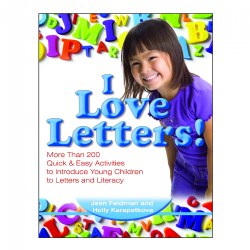
I Love Letters! - Paperback
Item: 88470
Status: In Stock
$16.95
Start children on a path toward a lifetime of reading with more than 200 activities, games, and songs that introduce them to the alphabet. It all begins with 26 letters. The wiggles and squiggles that turn into words, stories, poems, and great literature are the tools for future readers. Children will love learning their letters as they play the Name Game, sew their own letters, create Puzzle Pairs, and more! Jean Feldman and Holly Karapetkova apply their signature creative style to teach literacy… More »
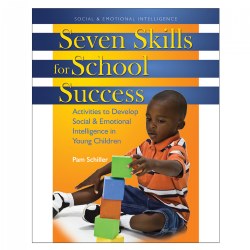
Seven Skills for School Success - Paperback
Item: 17251
Status: In Stock
$14.95
What do children need to learn first? Their ABCs? Their numbers? As it turns out, the "what" children need to develop is their social intelligence and emotional intelligence, the essential building blocks for all future learning. Best-selling author Pam Schiller provides information, activities, and experiences that develop the seven skills children need in order to become successful learners. These include the ability to relate to and play with others, express feelings, and understand… More »