Assessments & Evaluations
Having a solid picture of individual children's progress makes it easier to focus your observations and to consider the whole child. Kaplan offers a variety of evaluation and assessment materials to help early childhood educators, mental health professionals, and families gather the data needed to plan learning experiences, evaluate program goals, and promote young children's social and emotional development.

Item: 15483
Status: In Stock
$60.00
Absolutely essential to using ASQ-3®, this revised and redesigned guide provides step-by-step guidance on administering and scoring the questionnaires, setting up a screening system, working with families effectively, and using ASQ-3® across a wide range of settings.

Item: 15487
Status: Ships From Manufacturer
$54.95
Through footage of ASQ-3® tasks and close-ups of sample questions and scores, learn how to score the questionnaires accurately and decide if a referral for further assessment is needed.
Item: 26057
Status: In Stock
$100.00
The highly anticipated toddler version of the CLASS® tool is here -- providing early childhood programs with an accurate, reliable way to assess effective classrooms. For use with children from 15 - 36 months, this standardized observation tool measures the effectiveness of interactions between teachers and children, a primary ingredient of early educational experiences that prepare children for future school success. Spiral-bound, 80 pages.
Item: 28484
Status: In Stock
$50.00
This tri-fold laminated sheet is a handy reference for users of the CLASS® Infant observation tool. Available in convenient packages of 5, this sturdy quick-sheet shows evaluators what to look for while observing each of the CLASS® Infant dimensions and scoring the tool. Set of 5.
Item: 26068
Status: In Stock
$50.00
This tri-fold laminated sheet is a handy reference for users of the popular CLASS® Toddler observation tool. Available in convenient packages of 5, this sturdy quick-sheet shows evaluators what to look for while observing each of the 8 CLASS® Toddler dimensions and scoring the tool. This product is part of CLASS®, the bestselling classroom observational tool that measures interactions between children and teachers -- a primary ingredient of high-quality early educational experiences. With versions for toddler programs, PreK, and K-3 classrooms, the reliable and valid CLASS® tool establishes an accurate picture of the classroom through brief, repeated observation and scoring cycles and effectively pinpoints areas for improvement. Set of 5.
Item: 29055P
Status: In Stock
$52.00
This tri-fold laminated sheet is a handy reference for users of the popular CLASS® observation tool. Available in convenient packages of 5, this sturdy quick-sheet shows evaluators what to look for while observing each of the 10 CLASS® dimensions and scoring the tool. This product is part of CLASS®, the bestselling classroom observational tool that measures interactions between children and teachers -- a primary ingredient of high-quality early educational experiences. With versions for toddler programs, PreK, and K-3 classrooms, the reliable and valid CLASS® tool establishes an accurate picture of the classroom through brief, repeated observation and scoring cycles and effectively pinpoints areas for improvement. Set of 5, available in English and Spanish.
Item: 33002
Status: In Stock
$89.95
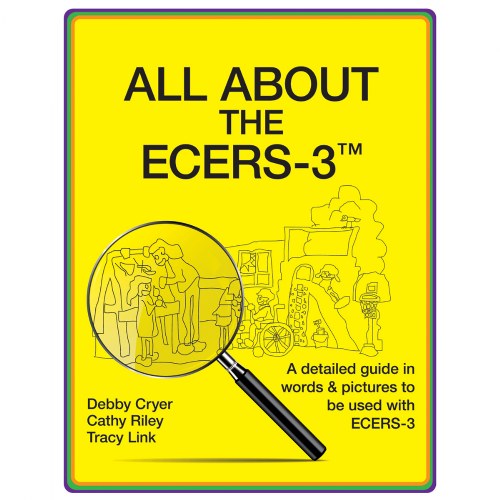
The Early Childhood Environment Rating Scale®, a staple of early childhood programs, has been updated! Use All About the ECERS-3™ to answer your questions about the third edition of this comprehensive assessment tool. It is organized to match the ECERS-3™ by subscale item, and indicator. Each section offers clear explanations of how to interpret each item and indicator on the scale, along with photographs of real-world settings. It will help you use the ECERS-3™ to accurately assess your early learning environment in the areas of cognitive, social-emotional, and physical development, as well as health and safety standards.
Item: 29059
Status: In Stock
$50.00
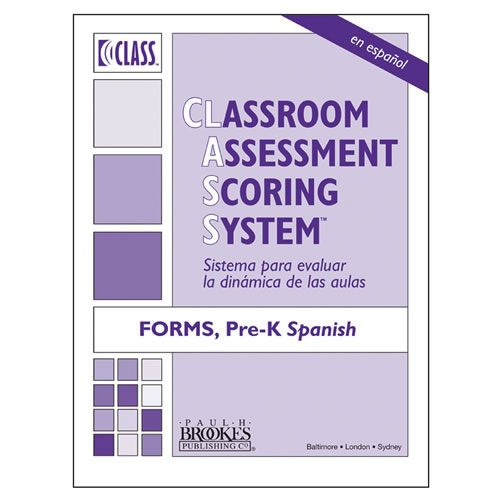
Available in packages of 10 booklets, each with 6 observation sheets and 1 scoring summary sheet, these are Spanish forms for conducting the Classroom Assessment Scoring System® (CLASS® ) observation. These forms are a part of CLASS®, the bestselling classroom observational tool that measures interactions between children and teachers -- a primary ingredient of high-quality early educational experiences. With versions for toddler programs, PreK, and K-3 classrooms, the reliable and valid CLASS® tool establishes an accurate picture of the classroom through brief, repeated observation and scoring cycles and effectively pinpoints areas for improvement. Set of 10 booklets with 8 pages each. Spanish.

Item: 301853
Status: In Stock
$68.00
The CLASS Environment Reference Manual is an essential resource for CLASS® Observers, designed to guide the use of the CLASS Environment tool alongside the CLASS tool during observations. Observers will find considerations for diversity, equity and inclusion, how to use within a CQI system, and more!

Item: 301855
Status: In Stock
$68.00
CLASS® Environment Reference Manual is a resource for CLASS Observers, to guide the use of the CLASS Environment with the CLASS tool during observations. Observers will find guidance for inclusion, how to use CQI system, and more!

Item: 301269P
Status: In Stock
$78.00
The CLASS 2nd Edition: Pre-K - 3rd Observation Field Guide provides the detailed descriptions for each dimension to guide observations and understanding of effective interactions across Pre-K through third-grade settings.
Item: 37269
Status: In Stock
$68.00
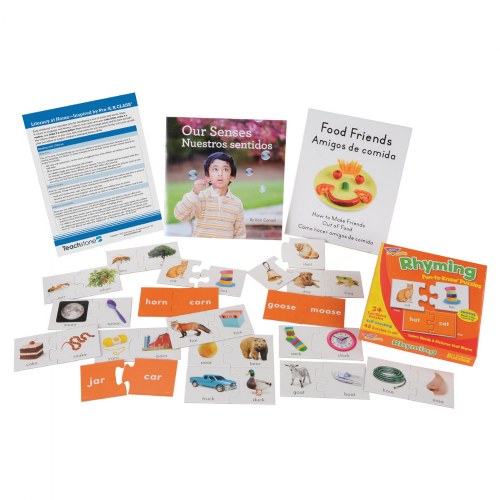
Empower families to engage in meaningful literacy experiences at home with the CLASS® Literacy at Home Kit. Designed to provide pre-k family members with the support, strategies, and resources to engage their children in meaningful and playful literacy experiences. Includes handout for families and materials they can use to support their child's literacy development and learning. Build consistency of literacy learning experiences by using in conjunction with the CLASS® Literacy Support Classroom Kit - Item #37268.

Item: 302635P
Status: In Stock
$78.00
The CLASS® 2nd Edition Infant-Toddler Observation Field Guide provides detailed descriptions of each dimension to guide observations and understanding of effective interactions across infant and toddler settings. Available in English or Spanish
Item: 73980
Status: Ships From Manufacturer
$54.95
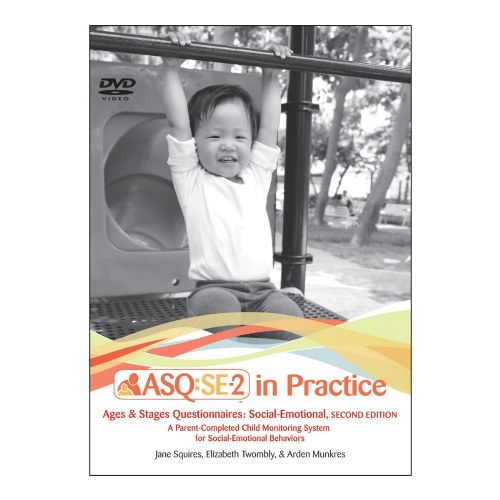
A helpful, informative companion to the Ages & Stages Questionnaires®: Social-Emotional, Second Edition (ASQ:SE-2) screening system, this DVD gives an overview of emotional and social development and provides a thorough introduction to ASQ:SE-2®:. Viewers get an inside look at the screening system in practice as they watch a home visitor using ASQ:SE-2®: with the family of a 4-year-old boy. They'll see how parents complete the questionnaires, with close-ups of sample questions. With this instructive DVD, early interventionists, home visitors, pediatricians, teachers, and other professionals will be fully prepared to administer and score ASQ:SE-2®:.

Item: 32950P
Status: Ships From Manufacturer
$54.95
Support the social-emotional development of young children through these engaging learning activities, handouts, and additional resources. These books, available in both English and Spanish, provide practical strategies for caregivers of children from birth to 6 years old. Features over 90 age-appropriate activities, nine informative newsletters for parents, and one-page summaries addressing key topics. Includes keycode access inside ASQ online.
Item: 30354
Status: In Stock
$59.95
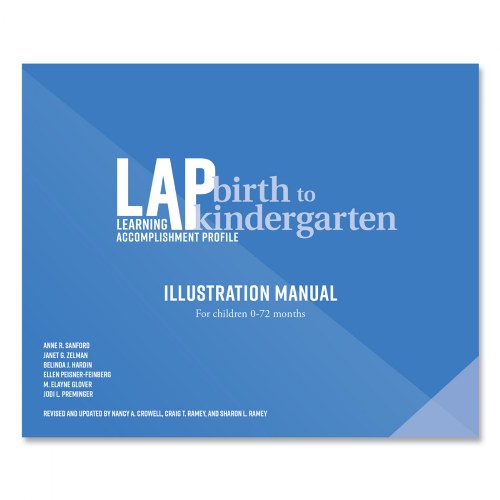
This Illustration Manual contains Illustrations, Numbers, and Letters to facilitate administration of the Learning Accomplishment Profile: Birth to Kindergarten (LAP™ B-K) assessment. A subscription to the Online LAP™ platform is required to administer and score items with the LAP™ B-K Illustration Manual.
Item: 37462
Status: In Stock
$89.95
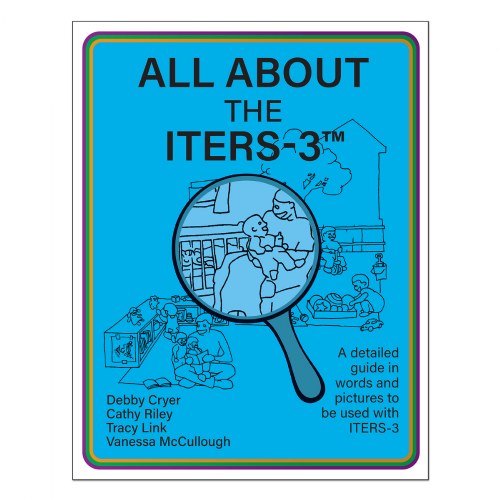
Use All About the ITERS-3 to answer your questions about the third edition of this comprehensive assessment tool. All About the ITERS-3 is organized to match the ITERS-3 by subscale, item, and indicator. Each section offers clear explanations of how to interpret each item and indicator on the scale, along with photographs of real-world settings. All About the ITERS-3 will help you use the ITERS-3 to accurately assess your infant/toddler environment in the areas of space and furnishings, personal care routines, language and books, activities, and interaction, as well as program structure.
Item: 98813
Status: In Stock
$59.95
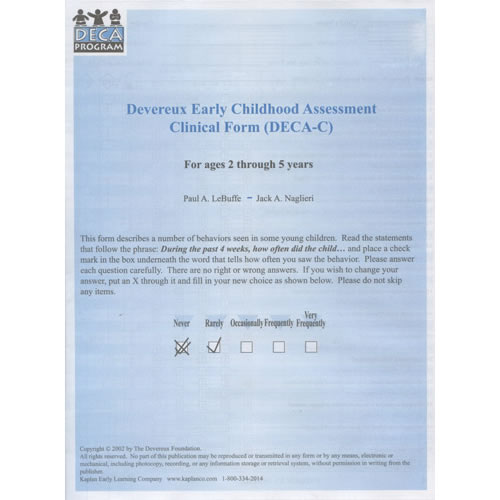
The Devereux Early Childhood Assessment Clinical Form (DECA-C) is designed to be used by early childhood mental health consultants and other mental health professionals with select children, ages 2 through 5, who are already showing significant behavioral concerns. The DECA-C contains all of the strength-based resilience items and scales found on the Devereux Early Childhood Assessment for Preschoolers, 2nd Edition (DECA-P2), but also assesses social and emotional concerns, including: aggression, attention problems, emotional control problems, and withdrawal/depression.
Item: 98814
Status: In Stock
$54.95
Authored by Paul A. LeBuffe and Jack A. Naglieri, this manual provides essential information on the development, administration, scoring, interpretations, and utilizations of DECA-C results in assessment, eligibility determinations, intervention planning and outcome evaluation. Chapters: Introduction; Development and Standardization; Psychometric Properties; Administration and Scoring; Interpretation; The Use of the DECA and DECA-C within the Early Childhood Mental Health Consultation Model. Copyright 2003 The Devereux Foundation.
Item: 94839
Status: In Stock
$52.95
Purchase an extra set of the LAP™-D 3, 4 and 5 year old screen manuals for each teacher in the program. Effective for guiding teachers quickly through the screening process.
Item: 84475
Status: In Stock
$75.00
This multimedia package demonstrates how to use the Family Child Care Environment Rating Scale® Revised Edition (FCCERS-R) by Thelma Harms, Debby Cryer, and Richard M. Clifford. Each training package contains an interactive DVD and an Instructor's Guide, which explains how to present the various training activities and provides answers for commonly asked questions. A companion 40-page Video Guide and Training Workbook, to be used in conjunction with the DVD, is sold separately. A personal copy of the Video Guide and Training Workbook, which may be reproduced for use in the classroom for educational purposes only, is required for each participant.
Item: 13600
Status: In Stock
$75.00
This multimedia package demonstrates how to use the ECERS-R™. Each training package contains an interactive video and an Instructor's Guide, which explains how to present the various training activities and provides answers and explanations for any questions that may arise. A 16-page Video Guide and Training Workbook, containing training activities, is sold separately, which can be reproduced for use in the classroom for educational purposes only.
Item: 50035
Status: Only 19 left
$71.95
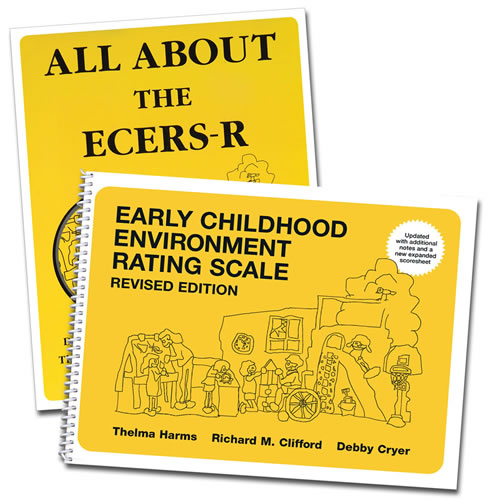
Save when you purchase the All About the ECERS-R™ and the ECERS-R™ spiral bound.